Do you need to test the well and septic before buying a home in Halifax?
If the property has a private well and septic system, I strongly recommend water testing and a professional septic inspection as part of your purchase conditions.
You’ll want to understand the water quality, available water supply, septic condition and maintenance history before committing to the purchase.
A Property Disclosure Statement and a standard home inspection are useful, but they don’t replace these checks.
If you’re looking at homes in Fall River, Hammonds Plains or other communities outside Halifax’s municipal service areas, private well and septic systems will likely be part of your search.
They shouldn’t put you off buying a home you love. They do, however, deserve the same attention you’d give the roof, foundation or heating system.
Here’s what I encourage buyers to check.
By Richard Payne | October 14 2026
What Do Sellers Have to Disclose in Nova Scotia?
A Property Disclosure Statement, or PDS, records what the seller knows about the property, including its water supply and sewage disposal system.
Sellers aren’t required to provide a PDS, but they must still disclose known material latent defects. Choosing not to complete the form doesn’t remove that obligation.
The important distinction is that a seller can only disclose what they know.
They may have lived in the home for years without noticing a problem, but that doesn’t confirm the water meets drinking-water guidelines or that every part of the septic system is in good condition.
Use the disclosure as a starting point for questions, rather than a substitute for testing.
You can read more in my guide to Property Disclosure Statements in Nova Scotia.
Well Water Testing: Check Quality and Quantity
There are two separate questions to answer:
- Is the water suitable for drinking?
- Can the well supply enough water for your household?
A water-quality test won’t answer both.
Test for bacteria and chemical contaminants
Clear water that tastes fine isn’t necessarily safe to drink.
Nova Scotia recommends testing private well water at least annually for bacteria and every five years for chemical contaminants, with more frequent testing in some circumstances.
When buying, I recommend discussing both bacteriological testing and a broader chemical analysis with a qualified testing provider. That should include consideration of naturally occurring contaminants such as arsenic, uranium and manganese.
If the home has water-treatment equipment, ask:
- What is the equipment treating?
- When was it last serviced?
- Are recent test results available?
- What maintenance and replacement costs should you expect?
An existing treatment system can be helpful, but you’ll want to understand whether it is working effectively.
Ask about the water supply
You’ll also want to review any available well records and ask about previous shortages, seasonal changes and whether the well has ever run dry.
Depending on the property and available information, a professional well assessment or flow test may be appropriate.
Think about how your household will use the home. A couple’s experience of the water supply may be quite different from that of a busy family doing laundry, running showers and watering a garden.

What Should a Septic Inspection Cover?
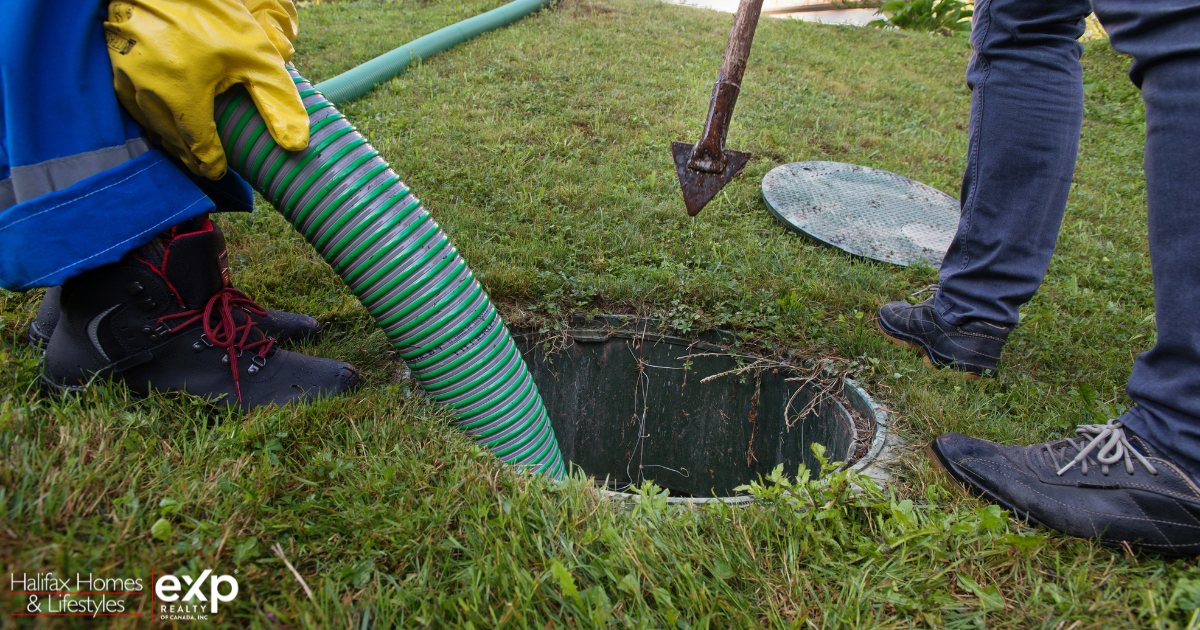
A septic system is largely underground, so a tidy lawn and working toilets don’t tell you everything you need to know.
The Nova Scotia Real Estate Commission recommends having a septic system inspected before finalizing a purchase. The process may involve pumping the tank and examining the disposal field for signs of problems.
Ask a qualified septic professional what their inspection includes and what they cannot assess. Depending on the system, access and site conditions, the inspection may consider:
- The tank’s condition and accessible components.
- Signs of leakage, backups or poor drainage.
- The condition of accessible pipes and connections.
- Evidence of problems around the disposal field.
- Whether further investigation is needed.
An inspection gives you useful information about the system’s current condition. It cannot guarantee how many years it has left.
Review the maintenance history
Ask for pumping receipts, previous inspection reports and any available installation, design or repair documentation.
Nova Scotia’s homeowner guidance recommends regular inspections and pumping every three to five years. The appropriate schedule depends on the system and how it is used.
Missing records don’t automatically mean the system is failing. They do mean there is more to establish before you rely on it.
Also confirm whether the property has a conventional septic system, another treatment system or a holding tank. The maintenance requirements and ongoing costs can be different.
Include Well and Septic Conditions in Your Offer
Arrange these checks before you become committed to buying, not as something to sort out after closing.
Your Agreement of Purchase and Sale should clearly address the inspections, testing, documents, access and deadlines needed for the property.
Nova Scotia’s Water and Septic Schedule, Form 431, provides clauses specifically relating to these systems.
Allow enough time to book professionals, receive laboratory results and investigate any concerns. A rushed deadline can make that difficult.
If results are unsatisfactory, your options depend on the agreement’s wording and meeting its notice requirements. You may be able to negotiate repairs or other changes, or terminate under the applicable condition.
Don’t assume that an unfavourable result automatically cancels the purchase or guarantees an immediate deposit refund. Review the next steps with your REALTOR® and lawyer before the deadline.
For more on this stage, read what happens after your offer is accepted in Halifax.
How Much Should You Budget?
Get quotes for the particular property rather than relying on one standard inspection price.
Your costs will depend on the laboratory tests requested, whether a well-flow assessment is needed, the septic inspection’s scope, access to the system and whether pumping or further investigation is required.
Ask what is included, whether tax is additional and how quickly you’ll receive the reports.
Repair costs also vary considerably. A water-treatment issue is very different from needing a new well, just as a repair to one septic component is different from replacing the disposal field.
If a problem is identified, get a professional assessment and written estimate before deciding what it means for your purchase.
Can You Get a Mortgage on a Well and Septic Property?
Yes, but confirm your lender’s requirements early.
Your lender may request water-quality results or other information about the private services. Requirements can vary, so ask your mortgage broker or lender exactly what documentation they need and when they need it.
Doing this before your financing deadline helps avoid a last-minute scramble.
Should You Waive Well and Septic Conditions?
My advice is to keep these protections in place.
I understand wanting to make your offer attractive, especially when you’ve found a home that feels right. But private water and sewage systems are too important to assess on reassurance alone.
We can discuss other parts of your offer, such as the closing date or deposit, while allowing proper time for due diligence.
Buying a well and septic home doesn’t need to feel daunting.
The aim is to understand what you’re buying, what maintenance comes with it and whether any issues need addressing before you move forward.

Frequently Asked Questions
Does a standard home inspection include well and septic testing?
Don’t assume it does. Confirm the inspector’s scope and arrange specialist water testing and septic assessment where needed.
Does a failed water test mean I shouldn’t buy the home?
Not necessarily. Some issues can be addressed with suitable treatment or repairs.
Establish the cause, proposed solution, ongoing maintenance and cost, then confirm the outcome through appropriate follow-up testing.
How long does a septic system last?
There isn’t one reliable lifespan for every system. Design, installation, soil conditions, usage and maintenance all matter. Age is useful context, but it doesn’t replace an assessment of condition.
What if the seller has no maintenance records?
Ask further questions and arrange independent checks. Missing paperwork creates uncertainty; it doesn’t prove that the system has failed.
Can a home have municipal water and private septic?
Yes. Confirm the water supply and sewage disposal arrangements separately for each property.
Thinking About Buying in Fall River, Hammonds Plains, Middle Sackville or Elsewhere in HRM?
A home with private well and septic services can be a great fit. The key is knowing which questions to ask before you make an offer, and giving yourself time to get the answers.
If you’re considering one of these properties, reach out. I’m happy to help you understand the buying process, arrange the appropriate checks and make an informed decision.
Book a free 30-minute call, and let’s talk through what you’re looking for.
About Richard Payne
Richard Payne is a REALTOR® with eXp Realty of Canada, helping buyers and sellers across Halifax and surrounding communities. Having moved his own family from the UK to Nova Scotia in 2007 and raised three children in Fall River, he brings personal experience and practical local insight to relocation, upsizing and downsizing. Learn more at richardpayne.ca.





 EN
EN
 FR
FR